In the corrugated board market, production efficiency, technological innovation, and industrial sustainability are increasingly closely linked. For a box plant, investing in a new Sipack converting line means increasing productivity, automation, and the ability to respond to market demands. But what happens to the machinery being replaced? It is precisely from this need that Sipack’s model dedicated to trade-in and the valorization of second-hand machines was born: a system that allows those investing in new equipment to give value to their existing machine fleet, while at the same time offering those looking for a smaller investment the opportunity to purchase reliable technology directly from the manufacturer.
The Sipack trade-in: a hassle-free transition to the new
More and more often, customers who choose our latest-generation technologies ask us to manage the collection of their old machinery. For a company, trading in with Sipack represents an immediate strategic advantage:
- Zero downtime: we manage the logistics of collection in conjunction with the installation of the new line.
- Valorization of used equipment: we evaluate your machinery based on its characteristics, condition, and market opportunities, turning it into leverage for the new investment.
- A single point of contact: the customer doesn’t need to worry about finding third-party buyers or managing complex negotiations.
In this way, the old machinery is no longer just an asset to dispose of, but can become an integral part of the new investment.
The opportunity for those seeking reliable used equipment
Not every industrial operation has the need or the financial capacity to invest in a brand-new line. There is a wide segment of box plants — whether in emerging markets or with specific production volumes — that need to expand production while optimizing their available budget. For these customers, a second-hand Sipack line can represent a concrete solution for increasing production capacity with a smaller investment.
Why choose a used Sipack machine?
The main advantage is being able to buy technology directly from its manufacturer.
Those who buy a used Sipack machine are not simply buying a used machine: they are buying a machine that we know, because we designed and built it ourselves. This means being able to rely on direct knowledge of the technology, configuration, and characteristics of the machine, with the possibility of intervening where necessary through overhaul or revamping activities. In addition:
Reduced start-up time: an existing, readily available machine can allow new production capacity to be introduced more quickly.
Manufacturer-backed reliability: not generic used equipment collected by a dealer that handles machinery of any brand, but technology that Sipack knows directly.
Lower investment: access to valuable machinery at a reduced cost compared to a newly built line.
Overhaul and revamping options: depending on the machine’s condition and the new customer’s needs, targeted interventions can be planned to bring it up to the required standards.
A model that creates value
Those who buy new optimize their investment; those who buy used get a reliable machine bearing the Sipack name; the industry reduces waste by extending the life cycle of machinery. At Sipack, we don’t just build machines: we design tailor-made industrial solutions for our customers’ growth. Trade-in thus becomes part of a model in which innovation, cost-effectiveness, and circular economy can coexist: a machine replaced at one box plant can find a second life at another production facility.
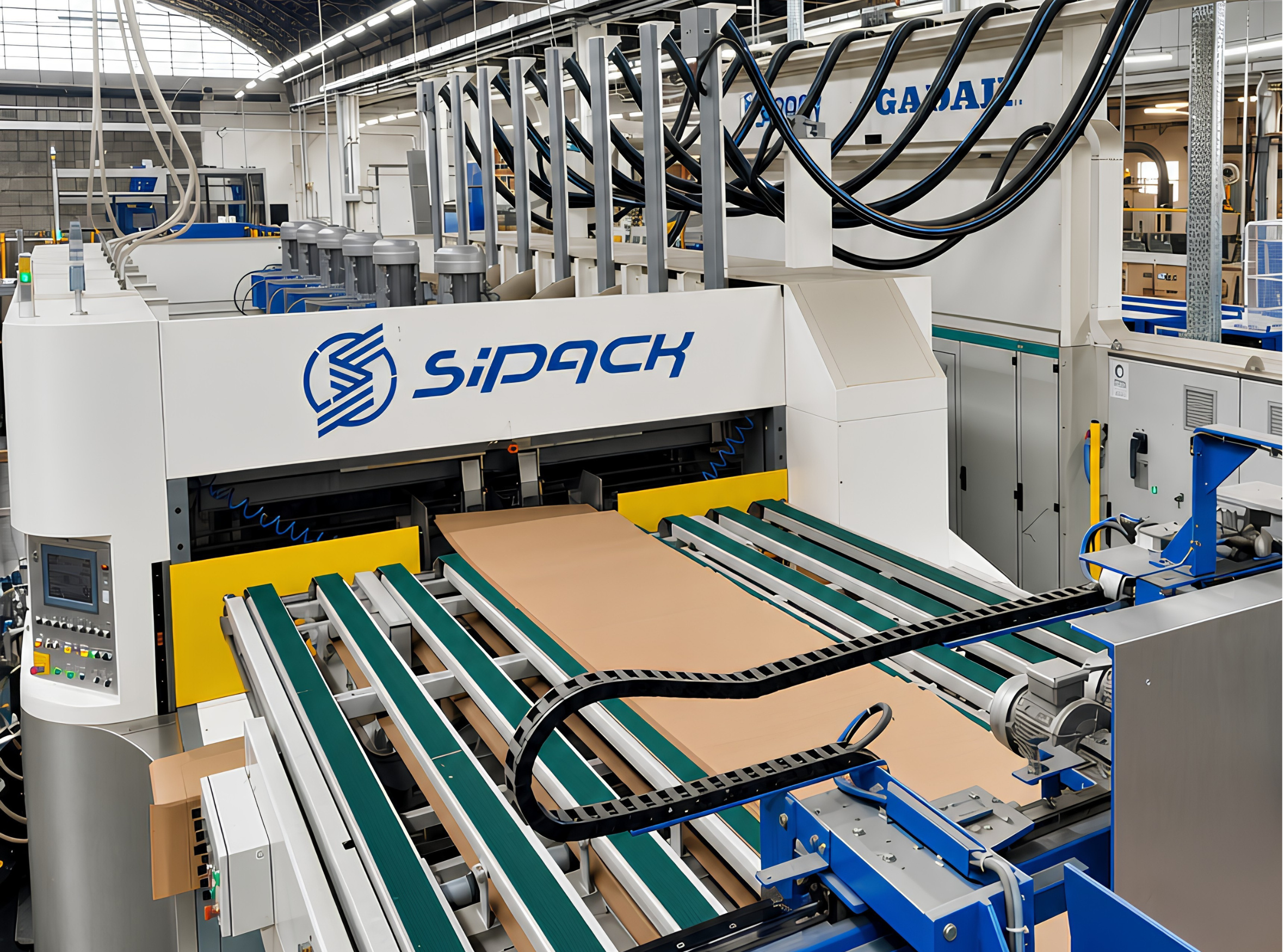
A concrete example of this is the current availability of a used 12.23 flexo folder gluer, configured with:
- Feeder
- 3 printing units
- Slotter
- Die-cutter
- In-line cleaner
- Folder-gluer
- Counter-ejector
A complete line, available for those interested.
What happens to second-hand machinery?
Every second-hand machine follows one of two paths in our workshops: a general overhaul of common wear components, or — upon request and as an additional value-added service — a more in-depth revamping process.
Our specialized technicians disassemble, inspect, and update every component:
- Mechanics: replacement of worn parts with original spare parts.
- Electronics: system updates to ensure modern standards.
- Safety: compliance with current regulations.
The result is a refurbished line, subjected to targeted interventions based on its condition and the new user’s needs, offering a reliable production solution and a concrete opportunity for companies that want to invest wisely, even when choosing second-hand machinery.
If this article has piqued your interest, or if you’re interested in the flexo folder gluer mentioned, don’t hesitate to contact our sales department for any further information by writing to: sales@sipack.it